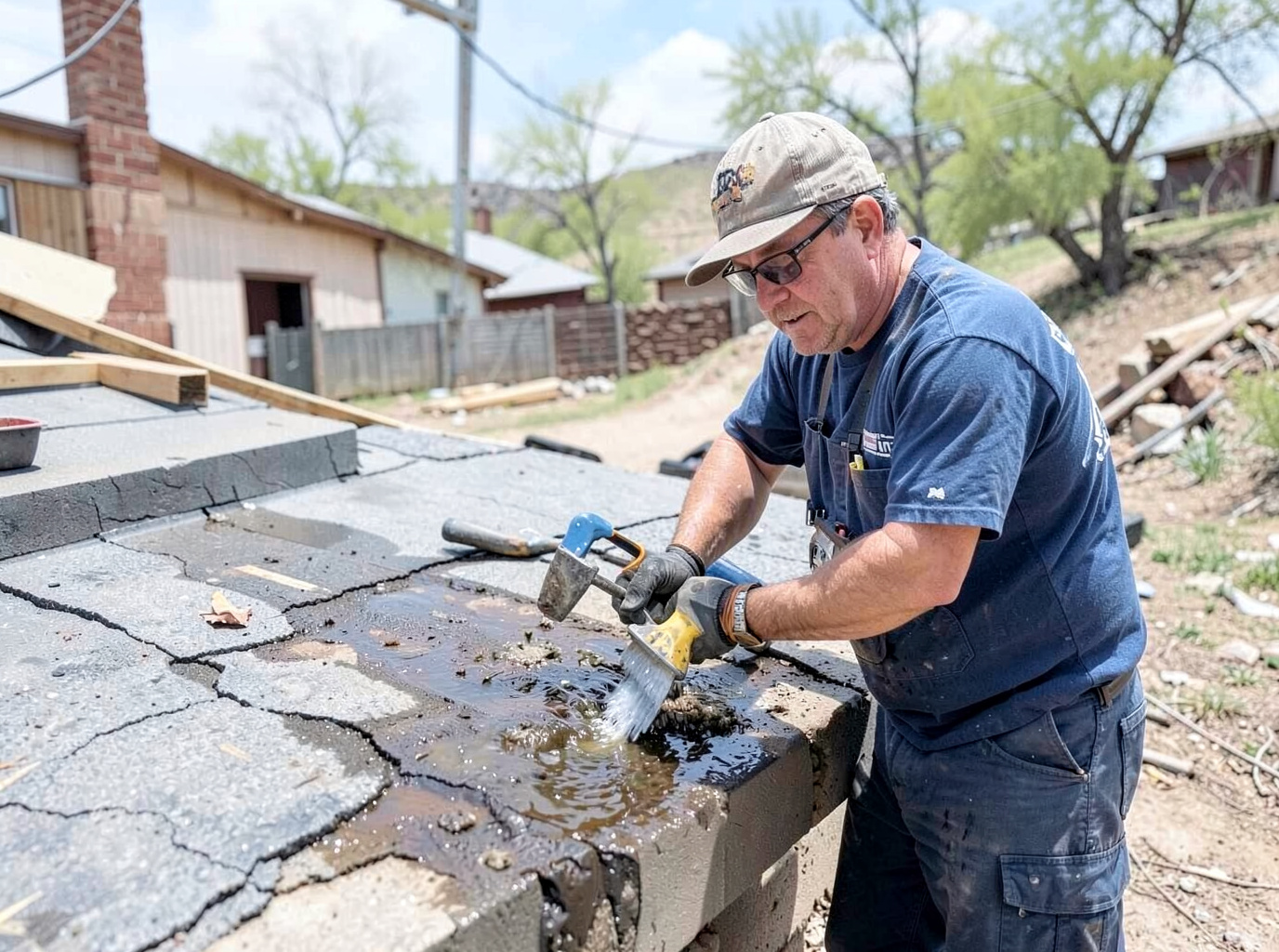
Cheyenne winters bring repeated freeze-thaw cycles that force water under shingles and flashing on homes built before the 1970s in the Historic District and Capitol Hill. These older roofs often have layered asphalt shingles over original wood decks that absorb moisture and rot faster than newer constructions in South Cheyenne or West Cheyenne. When a leak appears during a cold snap, interior damage can spread within hours because attic ventilation is frequently inadequate in Laramie County stock.
Emergency calls from Lakeview or North Cheyenne commonly involve wind-driven snow entering through ridge vents or damaged step flashing around chimneys. Technicians carry heat guns and ice picks to clear ice dams without tearing additional shingles, then install temporary butyl tape seals rated for sub-zero temperatures until permanent work can be scheduled. Homes near the Cheyenne Botanic Gardens sit on slightly higher ground that experiences stronger gusts, pushing water under eaves that newer East Cheyenne subdivisions rarely see.
Repairs in Sunnyside and near the Cheyenne Depot Museum area must account for the county's low annual precipitation yet intense spring runoff that saturates soil and raises attic humidity. Metal flashing replacements use 26-gauge galvanized stock to match existing profiles, and all seams receive elastomeric coating to handle the next freeze cycle. Homeowners are advised to avoid interior ceiling patches until the roof source is confirmed, as water can travel laterally along rafters for several feet in these older trusses.
Technician insight
In Cheyenne, the thing that catches most people out with Emergency Roof Leak Repair is how quickly a small crack near a valley turns into widespread attic saturation once the next warm spell hits after a cold snap, especially on the unvented older roofs common in the Historic District and Capitol Hill.
South Cheyenne Ice Dam Leak
Water began dripping through a ceiling in a South Cheyenne home after a January thaw. Inspection found an ice dam along the north-facing eave that had forced meltwater under three layers of shingles. Crew cleared the dam, replaced damaged underlayment and shingles, and sealed the valley with elastomeric coating rated for sub-zero temperatures.
Emergency Roof Leak Repair Services We Offer
✓Ice Dam Leak Response
Remove ice dams and install temporary heat tape or seals on roofs in Capitol Hill and Historic District homes where repeated freeze-thaw cycles push water under shingles.
✓Wind-Driven Snow Intrusion Repair
Seal ridge vents and eaves on Lakeview and North Cheyenne properties after high-wind events that drive snow under flashing and into attics.
✓Chimney Flashing Leak Fix
Replace or reseal step flashing around chimneys on South Cheyenne and Sunnyside homes where thermal expansion cracks allow meltwater entry.
✓Shingle and Underlayment Patch
Remove damaged sections and install new underlayment plus matching shingles on West Cheyenne and East Cheyenne roofs after storm-related punctures.
✓Valley and Ridge Leak Sealing
Clean and re-coat open valleys on older Laramie County homes near Burns and Carpenter where debris traps water during spring runoff.
Emergency Roof Leak Repair Cost in Cheyenne, WY
| Service | Typical Range | What Affects It |
|---|---|---|
| Emergency site visit and assessment | $125–$225 | Higher when roof is snow-covered or access requires extension ladders on two-story homes |
| Temporary leak containment | $200–$450 | Depends on ice dam size and whether heat tape installation is needed |
| Shingle and flashing replacement | $350–$850 | Moves with number of layers and whether valley or chimney work is required |
| Full ice dam removal and sealing | $400–$750 | Common on older Historic District roofs with poor attic ventilation |
Ranges are typical for Cheyenne, WY and confirmed with an exact written quote before any work starts.
How it works
- 1
Initial Site Assessment
Technician inspects attic and exterior from ladder, identifies active leak path, and checks for ice or wind damage specific to Cheyenne winter conditions.
- 2
Temporary Containment
Apply cold-weather tape or tarp over the breach to stop interior water intrusion while permanent materials are prepared.
- 3
Permanent Material Replacement
Remove affected shingles and flashing, install new underlayment and matching roofing, then seal all edges against future freeze-thaw cycles.
- 4
Final Water Test And Documentation
Hose test repaired area, photograph completed work, and advise homeowner on monitoring during the next temperature swing.
Pricing
Pricing varies by roof access, extent of hidden damage, and whether ice dams or multiple layers are present.